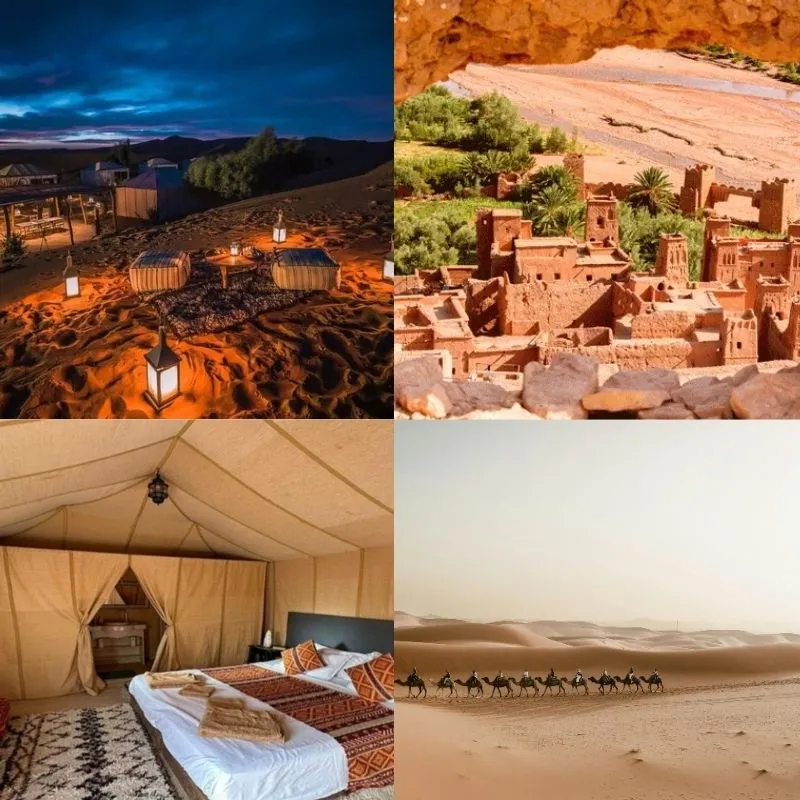
3 Days / 2 Nights
Marrakech → Merzouga → Marrakech
Private group
5.0/5 · TripAdvisor
Licensed tour operator
Native expert guides
No deposit to book
24/7 trip support
Overview
Our 3 days tour from Marrakech to Merzouga is the trip we're known for. About 560 km each way over the High Atlas, taking in the UNESCO kasbah of Aït Ben Haddou, the Dades and Todra gorges, a camel ride into the Erg Chebbi dunes at sunset and a night in a Berber desert camp. We collect you from your Marrakech hotel or riad and drop you back there on day three. Prices start at €185 per person, and there's no deposit to book.
Like every Morocco Tours trip, it's 100% private. Your group, your own native driver-guide, a comfortable air-conditioned 4x4 or minivan, and nobody else's timetable. No commission carpet shops, no scripted stops. Want ten more minutes at a viewpoint? Take twenty. That's been our way of working since 2008, and it's why first-timers short on time keep choosing this route.
It's the most requested departure on our calendar for a simple reason: in three days you get Morocco's two most photographed landscapes — the ochre kasbah country of the south and the golden dunes of the Sahara — without backtracking or adding travel days. Ask past travellers what stuck with them and you hear the same three things: crossing the Tizi n'Tichka pass, riding into Erg Chebbi as the sun drops, and waking up to sunrise over the dunes. Couples, families, groups of friends — the pace and the stops are built around you.
Marrakech to Merzouga: distance & drive time at a glance
Distance≈ 560 km each way
Day 1~330 km · 6–7 hrs with stops
Day 2~270 km · ~5 hrs to the dunes
Day 3~560 km · 8–9 hrs return
Why book this tour with us
Born-and-raised guides
Private local Berber & Arab guides who know every kasbah, dune and shortcut.
No-deposit booking
Reserve your dates now and pay nothing until your itinerary is approved.
100% tailor-made
Every stop, hotel and pace is built around you — never a fixed coach group.
Support all the way
Reachable on WhatsApp before and during your trip, day or night.
Tour highlights
- Cross the High Atlas via the Tizi n'Tichka pass (2,260 m)
- Explore Aït Ben Haddou, a UNESCO World Heritage kasbah
- Drive the Dades Valley and the Road of a Thousand Kasbahs
- Walk into the Todra Gorge, with its 300 m canyon walls
- Sunset camel trek over the Erg Chebbi dunes, with free sandboarding
- Overnight in a Berber desert camp with dinner, music and stargazing
- Return through the Draa Valley, Morocco's longest oasis
3 days tour from Marrakech to Merzouga: day-by-day itinerary
Day 1Marrakech → Tizi n'Tichka → Aït Ben Haddou → Ouarzazate → Dades Valley (330 km · ~6–7 hrs)
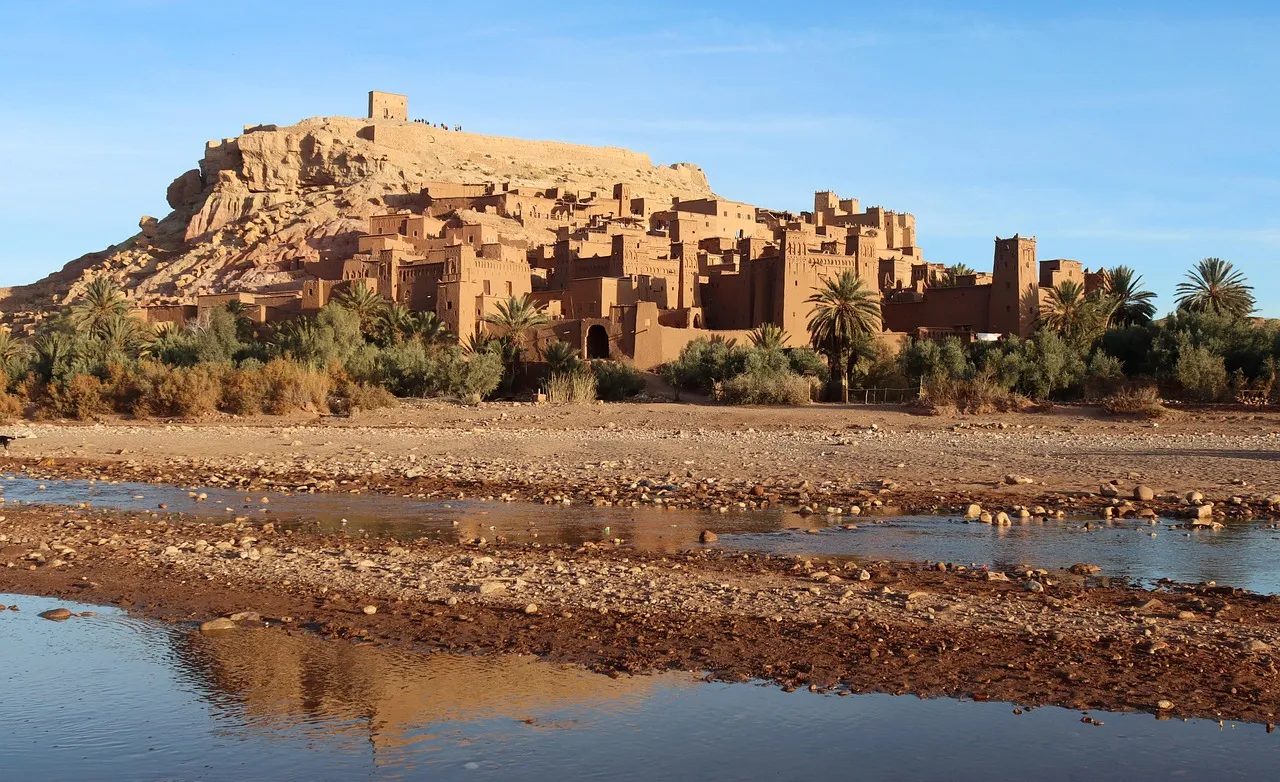
We pick you up around 8am and head straight for the mountains. The road over the Tizi n'Tichka pass climbs to 2,260 m with switchbacks and viewpoints the whole way — we'll stop when the light's good, not on a schedule. Late morning brings Aït Ben Haddou, the mud-brick fortress village you've already seen in Gladiator and Game of Thrones. You cross the river on foot and climb through the kasbahs with a local guide; the view from the granary at the top is the best photo of the day. After lunch we pass through Ouarzazate, Morocco's film-studio town, and follow the Dades Valley past palm groves and crumbling clay kasbahs to the guesthouse where we sleep tonight. (approx. 6–7 hrs driving, with stops)
Day 2Dades → Todra Gorge → Tinghir → Erfoud → Erg Chebbi camel trek → desert camp (270 km · ~5 hrs)
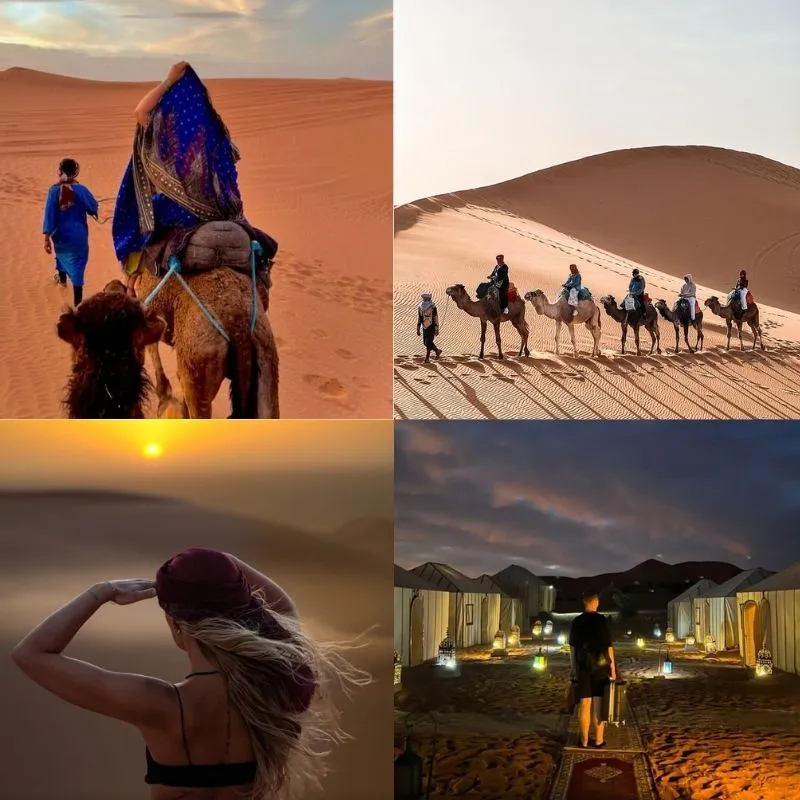
Breakfast, then a short drive to the Todra Gorge — a canyon where the walls shoot up 300 metres and the floor is barely wide enough for the river and the road. There's time for an easy walk on the flat. From there we push east through Tinghir and Erfoud (dates and fossils, in that order of importance to most locals), and the land gets drier and emptier until the first orange dunes appear on the horizon. Late afternoon in Merzouga means camels: a sunset trek into Erg Chebbi, a stop on a high crest for photos and a go at sandboarding, then into our Berber camp as the sky goes pink. Tagine by the fire, drumming, and stars you'll be talking about for years. Your main bag comes to the camp by 4x4 and will be in your tent when you arrive. (approx. 5 hrs driving, with stops)
Day 3Sunrise in the dunes → Rissani → Draa Valley → Agdz → High Atlas → Marrakech (560 km · ~8–9 hrs)
Set the alarm — sunrise over the dunes is the moment people write home about. Then back by camel (or 4x4 if your legs have opinions) for breakfast and a shower in Merzouga. The drive home takes a different line so you're not watching a rerun: through Rissani, the old caravan crossroads, then along the Draa Valley via Alnif, Tazzarine and N'Kob to Agdz — the longest oasis in Morocco, one unbroken ribbon of palms, kasbahs and crumbling ksour. It's a long day in the vehicle, but the road earns it. We stop for lunch and photos where the light's best, cross the High Atlas over Tizi n'Tichka in the afternoon, and pull into Marrakech around 7–8pm. Drop-off at your hotel or riad. Fair warning: you'll be looking at desert photos for weeks. (approx. 8–9 hrs driving)
Tour route map
Ready to explore the Sahara from Marrakech?
Tell us your dates and we will send a tailored plan within 24 hours — no deposit required.
Accommodation
You sleep in a hand-picked kasbah guesthouse in the Dades Valley, plus a comfortable Sahara camp with private tents, real beds and a Berber dinner under the stars. Choose standard, superior or luxury en-suite and we match it.
Transport
Travel in a private, air-conditioned 4x4 or modern minivan with your own English-speaking driver-guide. No shared coaches and no waiting — you set the pace and stop wherever you like for photos.
Where you'll stay
Choose your comfort level — Comfort, Superior or Luxury — and we hand-pick every riad, kasbah hotel and desert camp to match. Exact properties are confirmed on your personalised itinerary.
| Night | Area | Where you stay | Board |
|---|
| 1 | Dades Valley | Kasbah hotel or riade.g. Xaluca Dades / Kasbah Chez Pierre | Half-board · dinner & breakfast |
| 2 | Erg Chebbi (Merzouga) | Desert camp · private tente.g. a standard or luxury en-suite Erg Chebbi camp | Half-board · dinner & breakfast |
What's included
- Private air-conditioned 4x4 or minivan with fuel
- Professional English-speaking native driver-guide
- 1 night in a desert camp + 1 night in a Dades Valley guesthouse
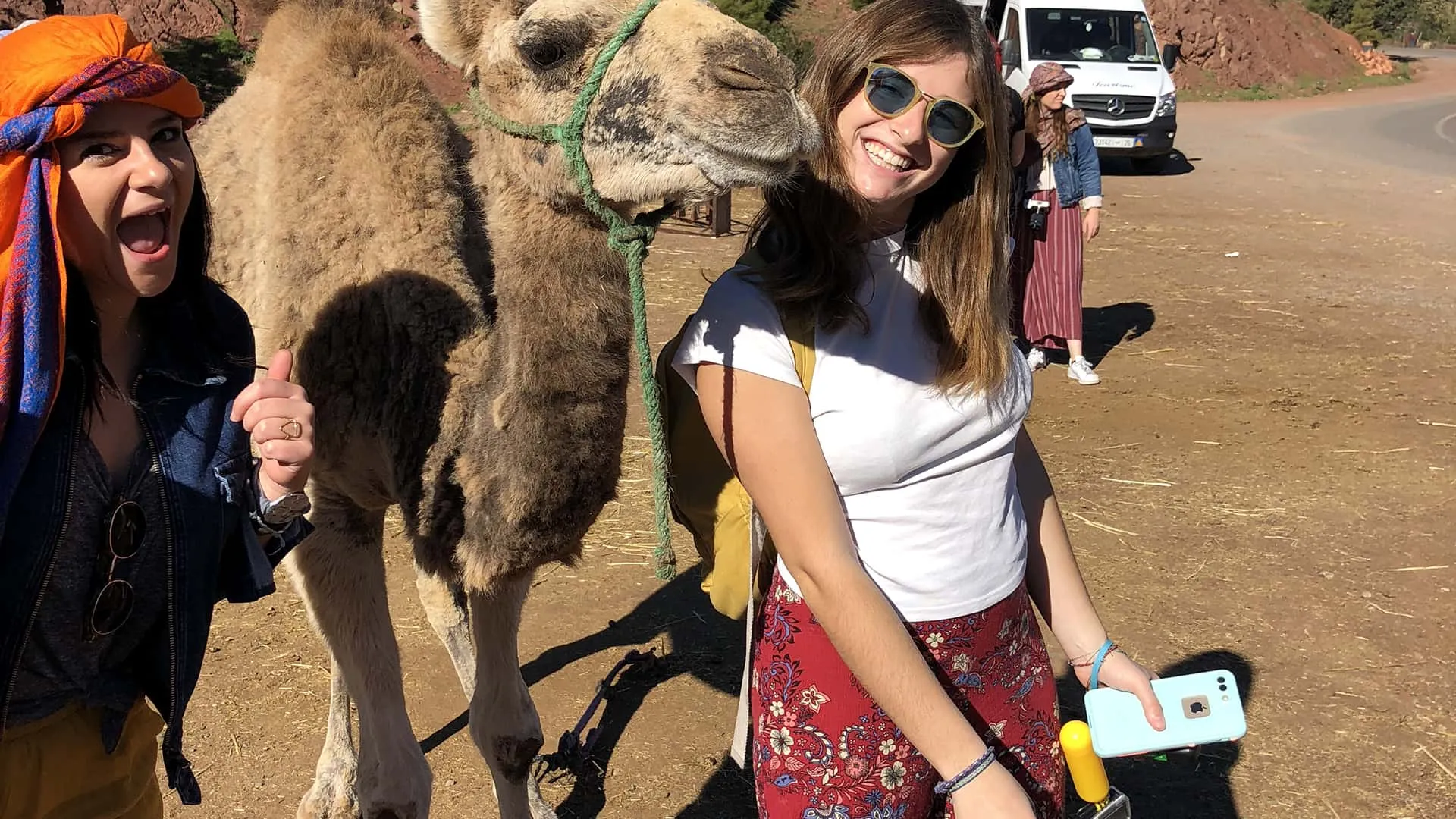
- Camel trek at Erg Chebbi at sunset (1 camel per person)
- 4x4 luggage transfer to and from the desert camp
- Sandboarding in the dunes
- 2 dinners and 2 breakfasts
- Hotel pick-up and drop-off in Marrakech
- Lunches and drinks
- Entrance fees to monuments (a few €)
- Tips for guide and camp staff
- Travel insurance
Tour price: how it works
This 3 days tour from Marrakech to Merzouga starts from €185 per person, based on two travellers sharing. One honest tip before you compare prices around the web: many cheap 'Marrakech desert tours' are shared minibuses with 15 strangers. Ours is private — your own vehicle and driver-guide — so compare like with like. The per-person rate drops as your group grows, and it moves a little with the season and whether you pick a standard or luxury camp. The quote we send lists everything (vehicle, guide, accommodation, camel trek, the meals above), and you approve it all before paying a dirham. Send us your dates and group size on WhatsApp and you'll have an exact price within 24 hours.
Private & upgrade options
Private tour
Just your group — your dates, your pace, your interests.
Luxury upgrade
Step up to boutique riads and a luxury desert camp with private bathrooms and gourmet dining.
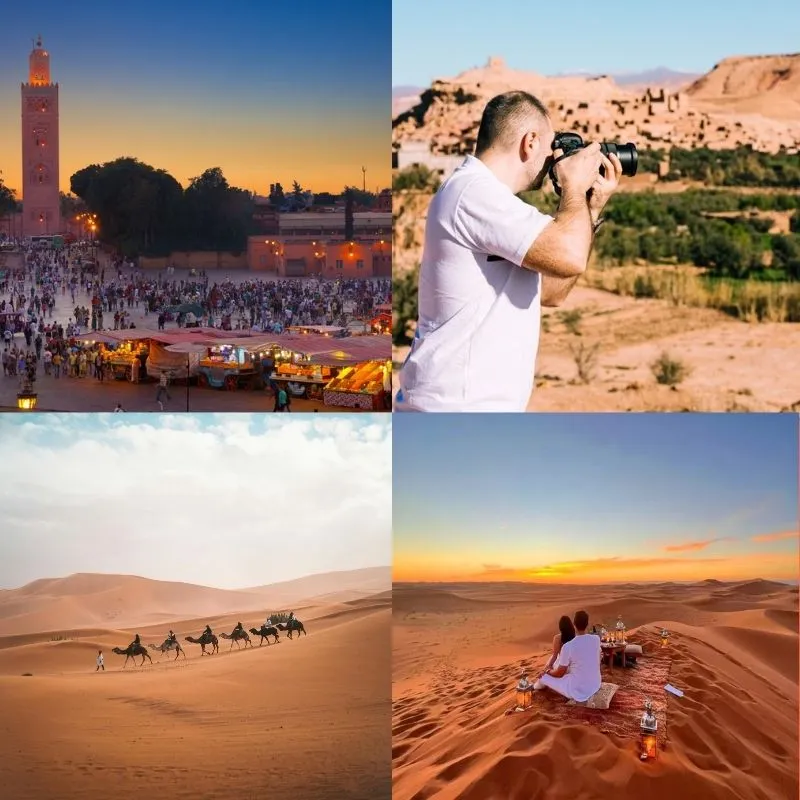
Photo gallery
Watch the experience
Good to know
GroupPrivate (your group only)
LanguagesEnglish, French, Spanish, Arabic
VehiclePrivate A/C 4x4 or minivan
PaceRelaxed and fully flexible
Pick-up~8:00am at your Marrakech hotel/riad
Drop-offDay 3 evening, back in Marrakech
Is the 3-day Marrakech to Merzouga tour worth it?
It's the question almost everyone asks before booking, and the honest answer is yes — provided you understand what three days means. Merzouga and the Erg Chebbi dunes sit roughly 560 km from Marrakech, so two of your three days involve real driving. What makes it worthwhile is that the road itself is one of Morocco's great scenic routes: you don't simply transit to the desert, you travel through the High Atlas, the kasbah country of Ouarzazate, the Dades Valley and the Todra Gorge to reach it. Every hour on the road earns its place.
If your priority is purely the dunes and you have only a long weekend, three days is the sweet spot — enough to ride camels into Erg Chebbi, sleep under the stars and watch both sunset and sunrise over the sand. If you'd rather travel more slowly, our 4-day desert tour from Marrakech adds the Valley of Roses and an easier daily pace, and the 5-day version brings in the Draa Valley in more depth. We'll happily talk through which length actually fits your dates rather than upselling you into days you don't need.
Best time of year for the Marrakech to Merzouga desert tour
The most comfortable seasons are spring (March to May) and autumn (September to early November), when daytime temperatures are warm but not punishing and desert nights are mild. These are also the most popular months, so we recommend booking your dates a few weeks ahead, especially around Easter and October half-term — our month-by-month guide to the best time to visit Morocco has the full picture.
Summer (June to August) is hot — frequently above 40°C around Merzouga in the afternoon — but it's perfectly doable if you start early, rest in the shade midday and save the dunes for sunset; it's also quieter and the night skies are spectacular. Winter (December to February) brings crisp, sunny days and genuinely cold nights that can approach freezing in the Sahara, so a warm layer is essential. Snow on the Tizi n'Tichka pass is occasionally possible in deep winter; our guides know the conditions daily and adjust timing or route accordingly so you're never caught out.
What to pack for the Sahara
You don't need specialist gear, but a few things make a real difference. Bring layers: a t-shirt for the day and a warm fleece or jacket for the evening, because desert temperatures swing widely between afternoon and night. Comfortable closed shoes are best for the kasbahs and the Todra Gorge, while sandals or trainers are fine for the dunes. A scarf or light shawl doubles as sun protection and a sand shield if the wind picks up.
Add sunglasses, a high-SPF sunscreen, a refillable water bottle and any personal medication, since pharmacies thin out once you leave the larger towns. Pack a small day-bag for the camel trek with your camera, a power bank and an extra layer — your main luggage is transferred to the camp by 4x4. Camps provide thick blankets and bedding, so a heavy sleeping bag is unnecessary even in winter. Our full Morocco packing list covers every season.
A night in an Erg Chebbi desert camp
Ask anyone who's done this trip what they remember and it's rarely the driving — it's this night. You ride in by camel as the dunes go from gold to deep orange and walk into camp just before dark. Dinner is unhurried: harira soup, a tagine cooked over coals, fresh fruit, everyone eating together under the big tent. Then the fire gets lit, the drums come out, and within ten minutes half the camp is either playing or dancing. The other half is flat on their backs in the cool sand, staring up.
And the sky deserves its own sentence. There's no town near Erg Chebbi, so there's basically no light pollution — on a clear night the Milky Way looks close enough to touch. The standard camps on this tour have private tents with real beds and shared washrooms; if you'd rather have your own bathroom, thicker rugs and a fancier dinner, we run luxury camps too and we'll happily quote both. Want a peek at the upgrade? Here's our Merzouga luxury desert camp.
Destination guides along the route
Aït Ben Haddou
Aït Ben Haddou is a fortified ksar — a cluster of earthen kasbahs enclosed by defensive walls — perched above the Ounila River on the old caravan route between the Sahara and Marrakech. Built from rammed earth and straw over centuries, its russet towers have barely changed since traders used this route to move gold, salt and spices north. UNESCO listed it as a World Heritage Site in 1987, both for its remarkable construction and because so few earthen ksour of this scale have survived intact. Its cinematic backdrop has also made it one of the most filmed locations in North Africa, appearing in Gladiator, Kingdom of Heaven, Game of Thrones and Prince of Persia. A handful of families still live within the walls, and a short walk across a footbridge takes you up through narrow alleys to a ruined agadir, or fortified granary, with sweeping views over the valley.
Dades Valley
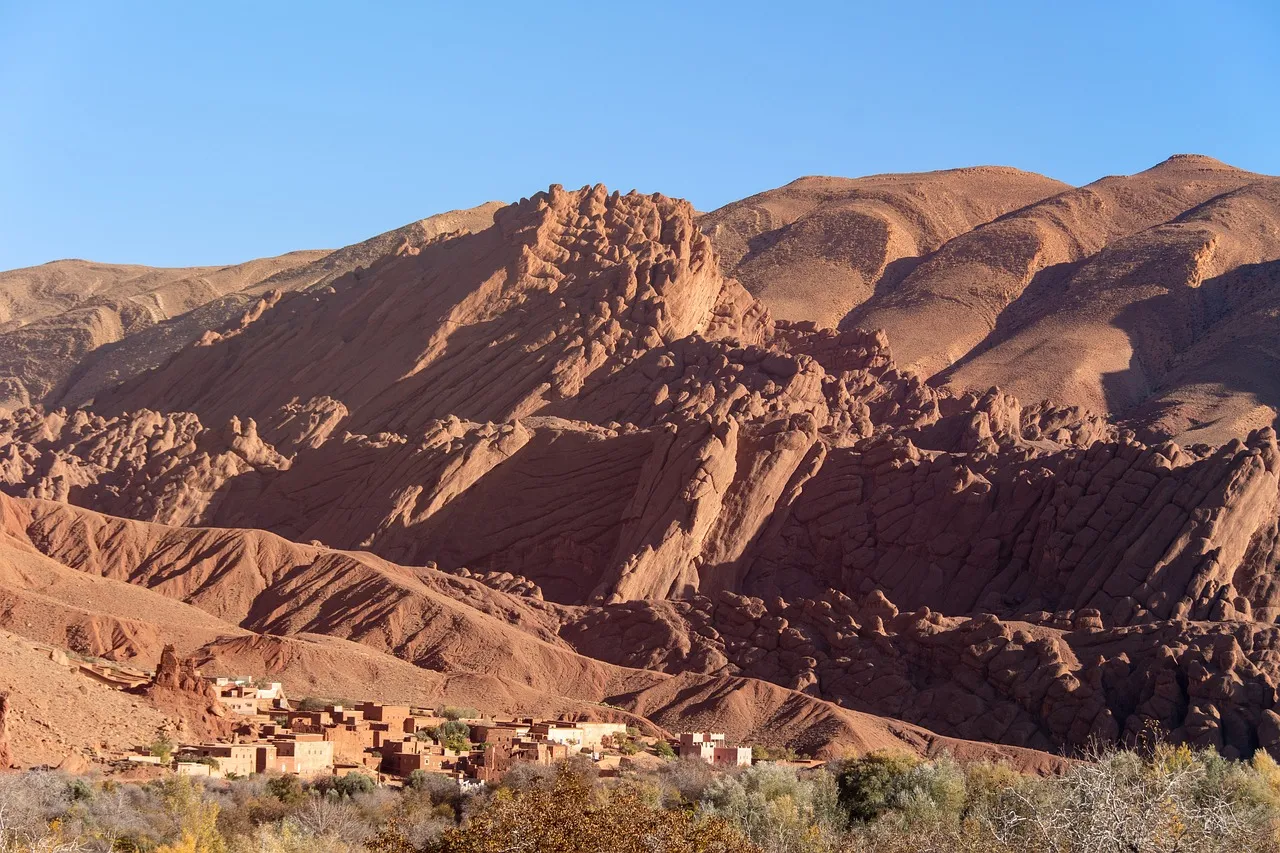
Known as the Road of a Thousand Kasbahs, the Dades Valley cuts through the foothills of the Atlas between Ouarzazate and Tinghir, its river lined with dense palm groves, almond orchards and rose fields. Kasbahs — the fortified mud-brick homes of former tribal chiefs — dot the cliffs above the road, many still inhabited, others crumbling gently back into the red earth they were built from. Higher up, the valley narrows into the dramatic Dades Gorge, where the road switchbacks past wind- and water-carved rock formations locally nicknamed the 'monkey fingers' for their strange bulging shapes. The Berber villages here still farm much as they have for generations, and in May the entire valley perfumes the air with the Kelaat M'Gouna rose harvest — one of the most scenic overnight stops in southern Morocco.
Todra Gorge
Todra Gorge is a narrow limestone canyon near Tinghir, carved over millions of years by the Todra River as it cuts through the eastern High Atlas. At its narrowest point, sheer rock walls rise up to 300 metres on either side while the gorge floor is barely 10 metres wide, creating a dramatic natural corridor that draws rock climbers from around the world alongside travellers passing through. A gentle walking trail follows the riverbed beneath the cliffs, shaded and cool even when the desert beyond is baking hot, with Berber cafés built into the rock offering mint tea and a place to rest. The gorge sits at the edge of a fertile palm oasis, a striking contrast to the arid plains that lead toward Merzouga.
Merzouga & Erg Chebbi
Merzouga is a small town on the edge of the Sahara, existing almost entirely because of what lies just beyond it: the Erg Chebbi dunes, a 22-kilometre-long, up to 5-kilometre-wide sea of sand rising as high as 150 metres. Unlike much of Morocco's pre-Saharan terrain, which is rocky hammada rather than sand, Erg Chebbi is a true 'sea of dunes', its colour shifting from pale gold at midday to deep orange and red at sunset. The dunes are reached by camel or 4x4 from Merzouga, and nomadic Berber families still herd goats along their edges much as they have for generations. Because the area sits far from any large town, light pollution is minimal, making it one of the best stargazing spots in North Africa. Read more in our Merzouga & Sahara destination guide.
Traveller reviews
★★★★★
"We had an amazing and unforgettable 3-day private tour from Marrakech to Merzouga with Visit Maghreb. Everything was well organized from start to finish... The camel ride through the dunes at sunset was a highlight of the trip, and spending the night in the desert was a truly magical experience."
★★★★★
"Our family spent three incredible days discovering Morocco with Visit Maghreb, and every moment was wonderful. Hamza helped us customize our itinerary before our arrival... Our driver, Mohamed, was great. The accommodations were excellent, especially the camp in the desert at Merzouga."
★★★★★
"We loved visiting the famous Kasbah Ait Ben Haddou and Todgha Gorge. We also really enjoyed the camel ride experience. Most importantly, the food we had was absolutely delicious! We had a fantastic desert experience with Visit Maghreb — will definitely be back next time!"
Who you'll be travelling with
Visit Maghreb is a small, licensed travel agency based in Marrakech, run since 2008 by native Moroccan guides born and raised across the regions you'll explore — the High Atlas, the southern kasbah valleys and the Sahara. Every itinerary is designed and led by people who actually live here, never resold from a call centre abroad.
Your private guide speaks your language and personally knows the families who run the riads and desert camps you'll stay in. Pricing is fully transparent with no hidden extras, you pay no deposit until your itinerary is approved, and we're reachable on WhatsApp before and throughout your journey.
Licensed tour operator
Native expert guides
Trusted since 2008
5/5 on TripAdvisor
Frequently asked questions
How far is Merzouga from Marrakech, and how long is the drive?
Merzouga and the Erg Chebbi dunes are roughly 560 km from Marrakech. The journey is split across three days: about 330 km over the High Atlas to the Dades Valley on day one (~6–7 hrs with stops), 270 km via the Todra Gorge to the dunes on day two (~5 hrs), and the direct 560 km return on day three (~8–9 hrs).
Is 3 days enough to see the Sahara from Marrakech?
Yes — three days is the minimum we recommend to reach Erg Chebbi, the most beautiful dunes, and still enjoy the journey rather than just rushing there and back. If you have an extra day, our 4-day desert tour adds the Valley of Roses and a slower pace.
What is the desert camp like?
By default you sleep in a comfortable standard camp with private tents, real beds, blankets and shared bathroom facilities. We also offer luxury camps with en-suite tents and finer dining — just ask and we'll quote both options.
What happens to my luggage during the camel trek?
You take only a small backpack with your essentials for the camp night. The rest of your luggage is transferred to the camp by 4x4 and will be waiting in your tent when you arrive — and brought back to the vehicle the next morning.
Can I try sandboarding or a quad bike in the dunes?
Yes. Sandboarding is available free at the camp — just ask the team for a board at sunset or sunrise. Quad biking and dune buggy rides in Erg Chebbi can be arranged as optional extras; tell us when booking and we'll include them in your plan.
How cold does the desert get at night?
From November to February desert nights are genuinely cold (sometimes near freezing), so bring a warm layer. Camps provide thick blankets. Spring and autumn nights are mild and very pleasant.
Can you pick us up from a riad in the Medina?
Yes. We collect you from your hotel or riad. If your riad is deep inside the car-free Medina, we'll meet you at the nearest car access point — your guide will arrange the exact spot by WhatsApp the day before.
Is this tour suitable for children?
Absolutely. Families love this trip. The camel trek is short and optional for small children, who can ride with a parent or take a 4x4 transfer to the camp instead. Let us know their ages and we'll adapt.
How much does this tour cost, and what affects the price?
Rates start from €185 per person based on double occupancy and a standard desert camp. The final price depends on group size (larger groups pay less per person), season, and whether you upgrade to a luxury en-suite camp or riad. We always quote the exact price before you commit to anything.
Is a deposit required to book?
No. We build and refine your itinerary first, and only take a small deposit once you've approved the full plan — never before.
What's included in the price?
Your private air-conditioned vehicle and driver-guide, one night's Dades Valley guesthouse and one night's desert camp with dinner and breakfast, the camel trek, sandboarding, 4x4 luggage transfer to the camp, and hotel pick-up and drop-off in Marrakech. Lunches, entrance fees, and tips are not included.
Do I need to be fit for the camel trek or the Todra Gorge walk?
No special fitness is needed for either. The camel ride is a gentle 45–60 minutes and the Todra Gorge walk is flat and easy; a 4x4 transfer to camp can replace the camel trek if you prefer.
What's the best time of year for this tour?
Spring and autumn offer the most comfortable temperatures. Summer is hot in the afternoons but the dunes are magical at sunset; winter nights in the desert can be cold, so pack a warm layer.
Is this a private tour or shared with strangers?
Always private. It's just your group, your driver-guide and your vehicle — never combined with other travellers or a fixed coach group.
Can you cater for vegetarians or other diets?
Yes — vegetarian, vegan and most dietary requirements are easily arranged at the guesthouse and the camp. Just tell us when booking so the kitchens are prepared.
What is your cancellation policy?
You can reschedule or cancel free of charge up to 30 days before departure. No deposit is taken until your itinerary is approved, so there's no risk in getting a tailored plan first.
How booking works
- 1
Enquire
Send your dates and wishes on WhatsApp or the form — free and no obligation.
- 2
Tailor
We design a day-by-day plan and refine it until it is exactly right.
- 3
Confirm
Approve the itinerary and reserve with a small, secure deposit.
- 4
Travel
Your private guide meets you on arrival — everything is handled.
Booking & cancellation
Flexible cancellation: reschedule or cancel free up to 30 days before departure. No deposit is taken until you approve your itinerary, and every price is transparent with no hidden extras.
Plan your Morocco trip
Other options to consider
Explore Morocco destination guides


 One Way