The short answer
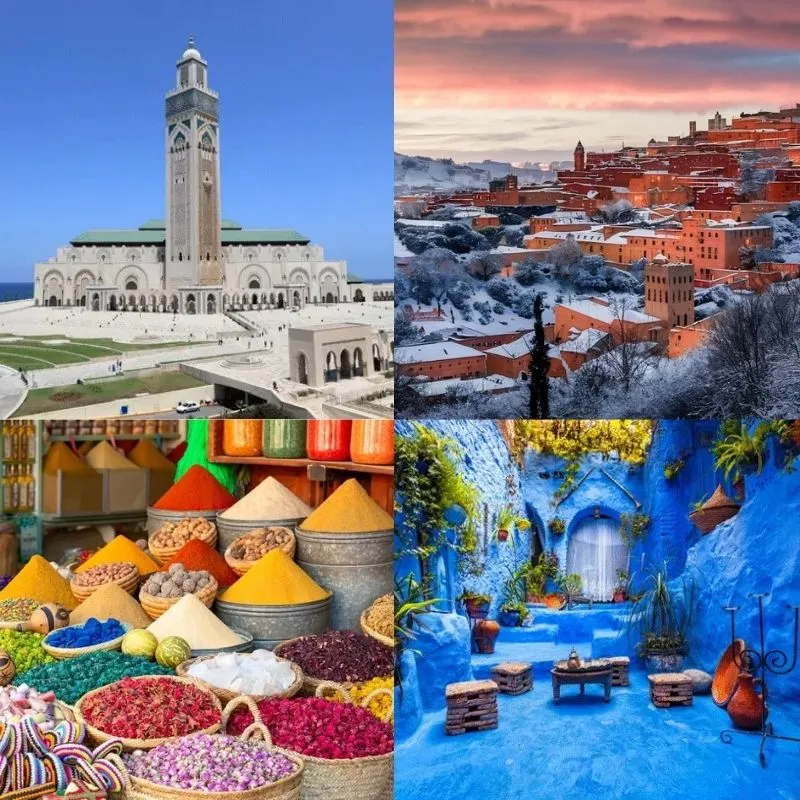
Spring (mid-March to May) and autumn (September to November) are the best times to visit Morocco. You get warm, sunny days, comfortable desert nights, and the cities are at their most pleasant. These are also the busiest and priciest months — for good reason.
Spring · March–May
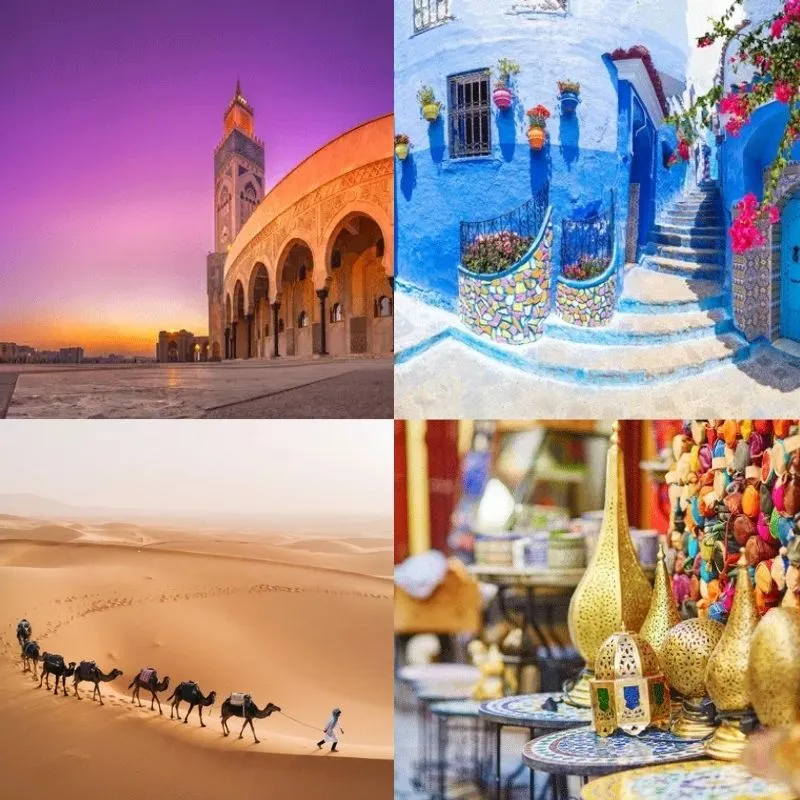
The sweet spot. Wildflowers carpet the valleys, the Atlas still holds a little snow on the peaks, and daytime temperatures are ideal for both the medinas and the desert. The Valley of Roses near Kelaât M'Gouna celebrates its rose harvest in May. Book ahead — this is peak season.
Summer · June–August
Hot inland. Marrakech and Fes regularly hit 38–42°C, and the Sahara is brutally hot by day, so desert camps are less comfortable. The Atlantic coast (Essaouira, Agadir) stays breezy and pleasant, and the Atlas Mountains offer cool relief and prime trekking. If you must travel in summer, plan around the coast and mountains.
Autumn · September–November
Our other favourite window. The fierce summer heat fades, the desert becomes comfortable again, and date harvest fills the southern oases. September and October are gorgeous; by late November desert nights turn cold.
Winter · December–February
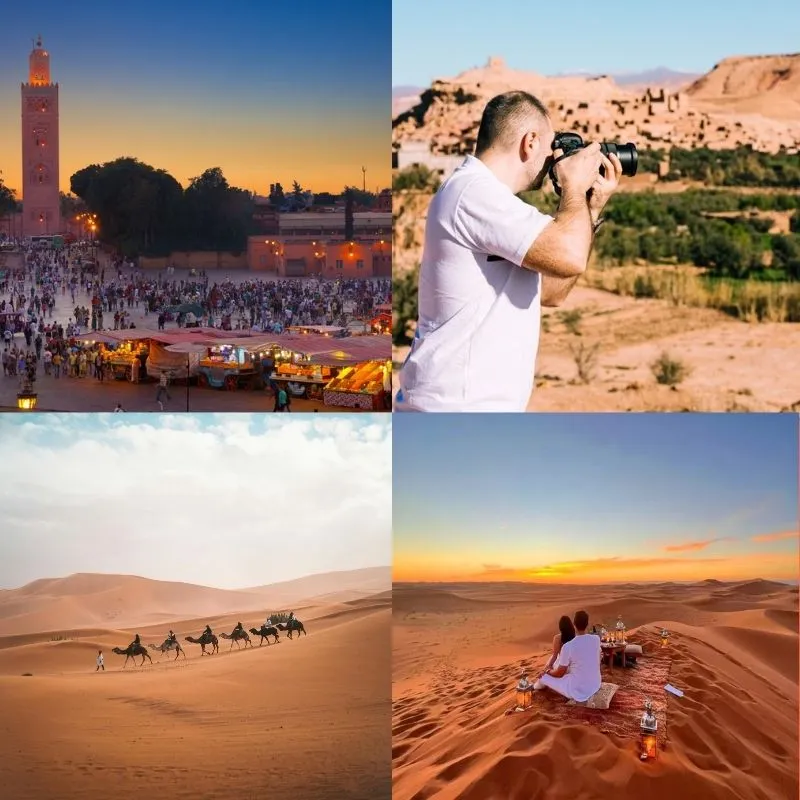
Quiet, atmospheric and great value. Days in the cities and desert are mild and sunny, but nights in the Sahara and Atlas are genuinely cold — even freezing — so pack warm layers. The high peaks are snow-capped, and you may even ski at Oukaïmeden. Coastal areas stay mild.
So when should you go?
For a first trip combining cities and the Sahara, aim for April, May, October or early November. For trekking, choose late spring or summer. For the coast, summer is fine. For low prices and few crowds, winter is underrated — just bring a coat for the desert.
The best time for the Sahara specifically
If the desert is the centrepiece of your trip, the calculation narrows. The dunes of Erg Chebbi are at their most comfortable in spring and autumn, when daytime warmth is pleasant and nights are cool rather than cold. October and April are arguably the perfect desert months: warm enough to enjoy a long camel trek at sunset, mild enough to sleep well under the stars.
Summer in the deep desert is intense — afternoons regularly exceed 40°C — but a night under the stars is still magical if you accept the midday heat and keep active to dawn and dusk. Winter swings the other way: gloriously clear, sunny days give way to genuinely cold nights that can dip below freezing, so the camp blankets and a warm jacket of your own are essential. Whatever the month, we time the camel trek for the cooler hours and adjust the day's pace to the season.
Festivals worth planning around
Timing your visit to a festival adds a memorable layer. The Fes Festival of World Sacred Music (usually late spring) fills the imperial city with concerts in historic courtyards; the Rose Festival in the Valley of Roses celebrates the May harvest with parades and music; and the Marrakech International Film Festival lights up the city in late autumn. In the south, the Erfoud Date Festival marks the October harvest.
Religious dates also shape the calendar. Ramadan, which shifts about eleven days earlier each year, is a fascinating but quieter time — some daytime cafés reduce hours, while evenings become festive. Tours run as normal throughout; we simply build the day around the rhythm of the month, and your guide will flag anything worth seeing or avoiding.
A quick guide by region
Because Morocco spans coast, mountains, cities and desert, the 'best' month depends on where you're headed. For the imperial cities (Marrakech, Fes, Meknes), spring and autumn are ideal and winter is mild and quiet. For the Sahara, stick to spring and autumn for comfort. For the Atlantic coast (Essaouira, Agadir), summer is breezy and perfect while inland bakes. For trekking the High Atlas, late spring through early autumn opens the high passes.
Most first-time itineraries combine two or three of these regions, so the sweet spot that satisfies them all is, once again, spring or autumn — which is exactly why those seasons are busiest. Booking a few weeks ahead for an April, May, October or early-November trip is wise, especially around Easter and the October half-term.
Frequently asked questions
What is the rainy season in Morocco?
Most rain falls between November and March, mainly in the north and the mountains. The south and desert are dry almost year-round.
Is Ramadan a good time to visit?
It's a fascinating cultural time, but some restaurants and shops keep reduced daytime hours. Tours run as normal and evenings are festive. Dates shift ~11 days earlier each year.
Official resources
Born beside the dunes of Erg Chebbi and a licensed Moroccan guide since 2008, Elhoussaine founded Visit Maghreb to share the country he grew up in. Over more than 15 years he has guided travellers from every continent across the High Atlas, the imperial cities and the Sahara — and still plans every itinerary personally.
Planning a trip? We design private, tailor-made Morocco tours around exactly this kind of advice. Tell us your dates →