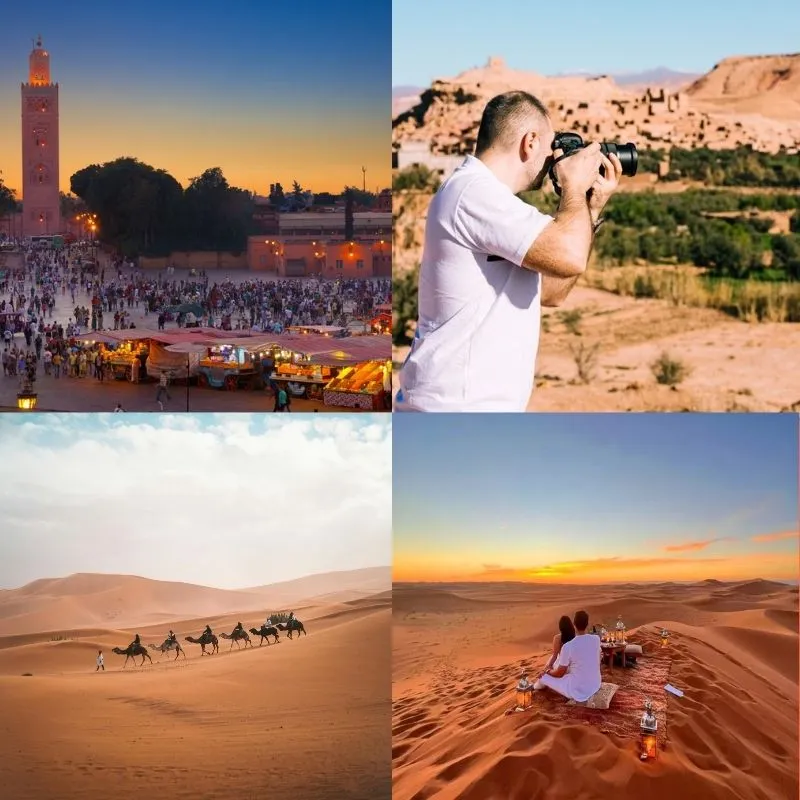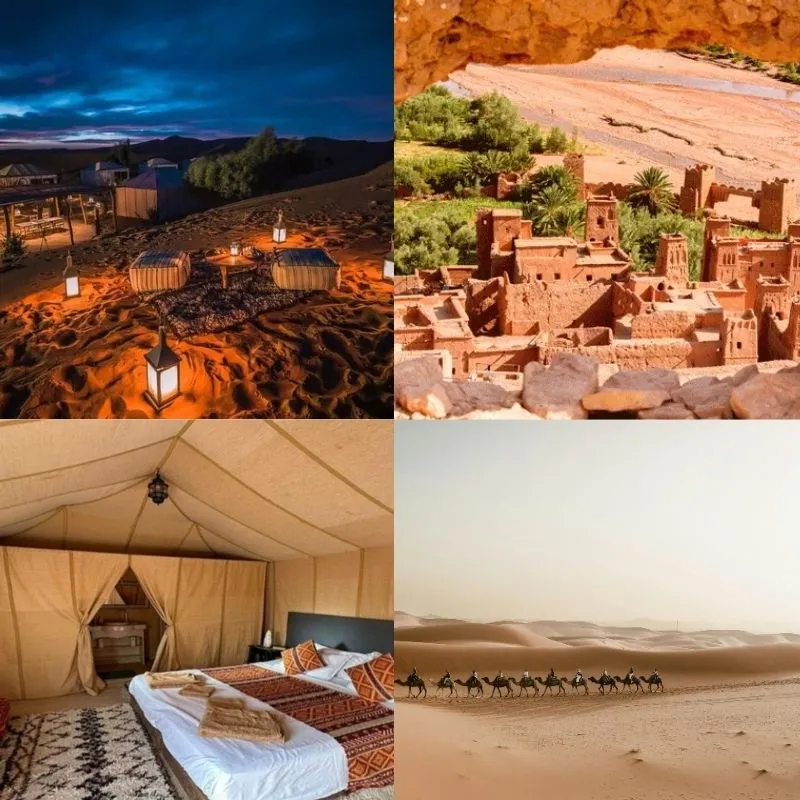
What is a Moroccan camel trek?
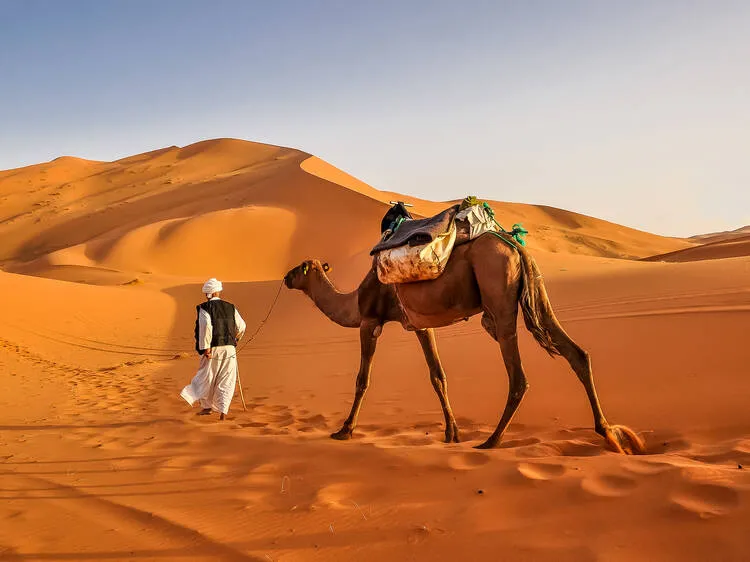
A camel trek is the traditional way to reach a desert camp: you ride a dromedary in a slow caravan, led on foot by a Berber guide, across the dunes to a tented camp for the night. It is gentle, unhurried and timed for the cool, golden hours of sunset and sunrise — far more about the scenery and the silence than the riding itself.
How long do you actually ride?
Shorter than most people expect. The classic sunset trek to camp is usually 30 to 60 minutes each way — long enough to feel the rhythm of the desert without aching. If you want more, we can arrange longer half-day or multi-day treks deep into Erg Chebbi, camping at a different spot each night, but for most travellers a short evening ride and a morning return is plenty.
Where to go: Merzouga or Zagora?
The big dunes of Erg Chebbi at Merzouga are the classic choice — the most spectacular sand sea in Morocco, reached on our 3-day desert tour or a quick overnight camel trek. Zagora and Erg Chigaga are wilder and emptier, better if solitude matters more than the very biggest dunes. Our Sahara desert guide compares them in full.
What it feels like — and is it comfortable?
Camels kneel for you to climb on, then rise back-legs-first, so hold the saddle horn and lean back for that first lurch. The pace is a slow sway; the wooden-and-blanket saddle is padded but firm, so an hour is comfortable for almost everyone while several hours can leave you a little saddle-sore. Wear long trousers to avoid rubbing, and tell your guide if you want to stop and walk a stretch — many people do, and the guide leads the camel either way.
What to wear and bring
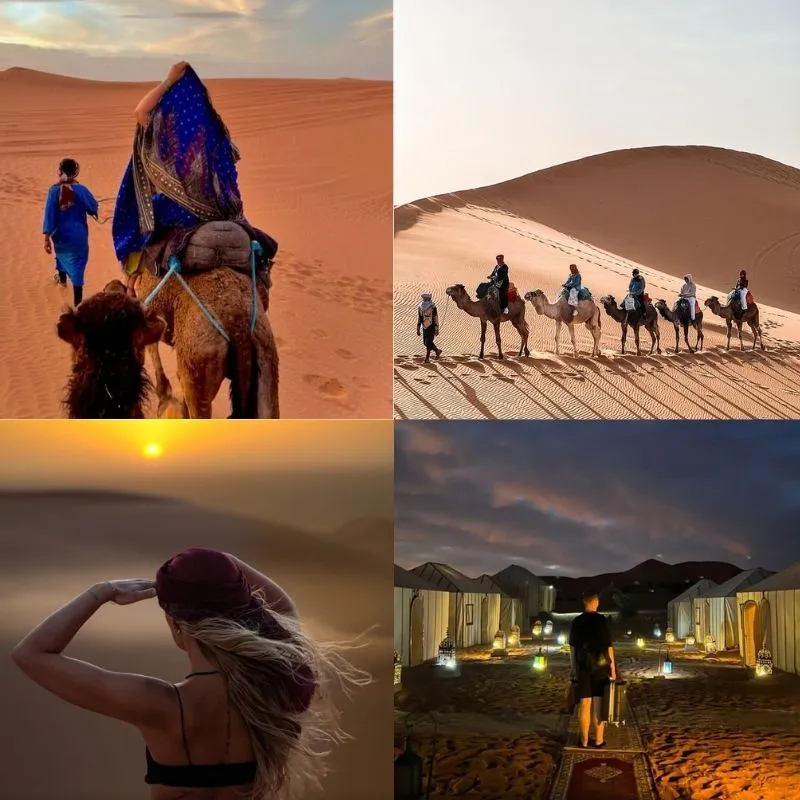
Dress for warm days and cool nights: light layers, long trousers, and a warm jacket for the evening. Bring a scarf (your guide can show you how to wrap it against sun and sand), sunglasses, sunscreen, and closed shoes that you don't mind filling with a little sand. A small daypack with water and a camera is all you need — your main luggage stays in the vehicle and meets you back at the road.
How we treat the camels
We work only with local cameleers who own and care for their animals year-round, and we keep treks short, load weights sensible, and rides to the cooler hours. Camels that are tired, very young or unwell don't work. If you would rather not ride at all, a 4x4 reaches most of our camps in minutes — just tell us, and you'll still get the dunes, the camp and the stars.
The best camel-trek tours
For a first taste, the overnight Merzouga camel trek is the quickest way into the dunes. For the full journey, the 3-day Marrakech to Merzouga tour and the 4-day desert tour build the camel trek into a wider loop. For a special night, add the luxury desert camp.
Plan your Sahara camel trek
Every desert trip we run is private and tailor-made, and we time the camel trek for the best light of the day. Tell us your dates and how long you have, and we'll build the trek — and the route to it — around you. Browse all Morocco tours or send us your dates for a free plan within 24 hours.
Frequently asked questions
How long is a camel ride in the Moroccan desert?
The classic sunset trek to a desert camp is usually 30–60 minutes each way. Longer half-day and multi-day treks can be arranged, but most travellers ride to camp in the evening and back in the morning.
Is camel trekking safe and comfortable?
Yes — it is slow and led on foot by a guide. The saddle is firm, so an hour is comfortable for most people; wear long trousers and ask to stop and walk if you wish.
Do you have to ride a camel to reach the desert camp?
No. A 4x4 reaches most of our camps in minutes, which suits families with young children or anyone with back trouble. You still get the dunes, the camp and the stargazing.
Where is the best place for camel trekking in Morocco?
Erg Chebbi at Merzouga has the biggest, most spectacular dunes. Erg Chigaga near Zagora is wilder and quieter. Both offer sunset treks to a desert camp.
Official resources
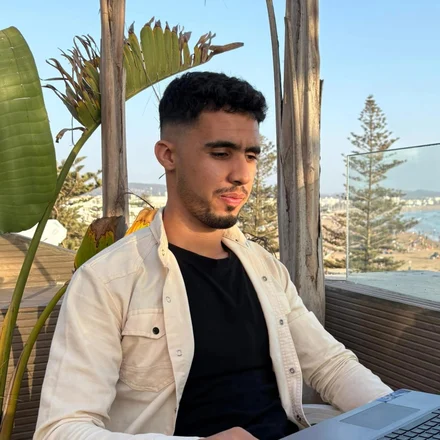
Born beside the dunes of Erg Chebbi and a licensed Moroccan guide since 2008, Elhoussaine founded Visit Maghreb to share the country he grew up in. Over more than 15 years he has guided travellers from every continent across the High Atlas, the imperial cities and the Sahara — and still plans every itinerary personally.
Planning a trip? We design private, tailor-made Morocco tours around exactly this kind of advice. Tell us your dates →